
There is a particular silence that falls over a reader who has just finished And Then There Were None, Agatha Christie’s 1939 masterwork. It is the 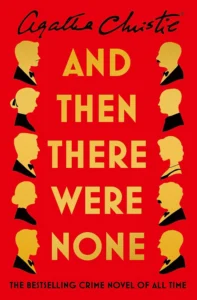 silence of someone who has been outwitted and knows it. Ten strangers travel to an isolated island off the English coast. Each one carries a secret. Each one committed a crime the law never touched. One by one, an unseen killer picks them off, in an order that mirrors an old nursery rhyme pinned to every bedroom wall. No detective wanders the halls with a magnifying glass. No comforting outsider arrives to restore order. Only the killer remains hidden among the dying, and the reader keeps guessing alongside everyone else. This absence of a traditional sleuth makes the novel one of the most radical entries in detective mystery history.
A Genre Without Its Detective
Golden Age detective mystery fiction relied on a stable architecture. A brilliant investigator studies the clues. A baffled police force watches and waits. A drawing-room confession ties everything together. Christie herself had perfected that formula through Poirot and Marple. And Then There Were None dismantles it completely.The novel asks a frightening question: what happens when no detective exists at all? The victims must detect on their own behalf, with their own lives as the stakes. Every character becomes a suspect, a witness, and a ticking clock at the same time. This structural daring explains why critics and crime writers still cite the book as a turning point for the detective mystery as a form, not just a story within it.
A Puzzle Built on Constraint
Christie excelled at constraint, and here she set the strictest one imaginable. Ten people occupy one island. No escape exists. The body count must reach zero. Each death gets staged and partly witnessed, then explained only in retrospect. The reader loses the usual luxury of trusting any single perspective.
This is what separates the novel from cozier detective mystery stories of its era. It never lets you admire a great mind solving a puzzle from a safe distance. Instead, it traps you inside the puzzle. You breathe the same recycled air as the suspects. You second-guess the same faces over breakfast that you will mourn by dinner.
A Moral Reckoning Disguised as a Game
The book’s moral seriousness elevates it beyond a clever locked-room exercise. Each of the ten guests caused a death at some point and escaped consequence, through cowardice, negligence, or calculated cruelty. The unseen judge who orchestrates their punishment cares nothing for legal guilt. He pursues moral reckoning instead.
The gives the novel a philosophical undertow that genre fiction rarely achieved at the time. Christie used the conventions of the detective mystery to raise uncomfortable questions. Can courts ever deliver real justice? Does guilt simply hide behind respectability? The nursery rhyme structure looks playful on the surface, but it functions almost like liturgy: a countdown toward judgment, dressed in the rhythm of a children’s song.
The Blueprint Everyone Still Borrows
This novel remains the best-selling crime novel of all time. That fact reflects careful design, not just nostalgia. The central trick still works today: Christie withholds the detective, then reveals that the murderer was never a stranger but always one of the trapped. Writers have imitated this trick so often that audiences now recognize it as a genre staple, even without knowing its origin.
Every isolated-cabin thriller borrows from it. Every dinner party where the killer sits at the table borrows from it. Every “everyone is a suspect” premise on television owes a structural debt to this single detective mystery, plotted ruthlessly and published when Christie already ranked as the most famous mystery writer alive.
Why the Island Still Holds Us
Reading And Then There Were None today means encountering the exact moment the detective mystery learned it could survive without its detective. Suspense no longer needed brilliant deduction; it could instead grow from slow, democratic terror. Nobody knows who among the group poses the real threat.
Christie did not invent suspicion as a literary device, but she industrialized it. She built an efficient machine for paranoia, and the genre has never quite escaped its blueprint. Nearly ninety years later, the island stays occupied. The rhyme still gets recited. And the detective mystery still pays rent on the real estate Christie claimed first.