
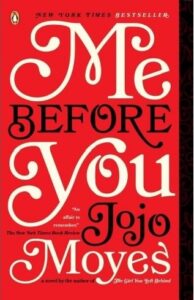
 Jojo Moyes’ Me Before You opens like a familiar story. A quirky, broke young woman takes a caregiving job. A wealthy, wounded man resists her help. Slowly, against his will, he begins to need her. Readers expect the usual rhythm of a romantic novel. They expect warmth to win in the end. Moyes builds that expectation carefully, then breaks it on purpose.
A Setup That Feels Safe
Louisa Clark loses her job at a small café and takes work caring for Will Traynor, a former adventurer left quadriplegic after an accident. Will is sharp, bitter, and determined to die through assisted suicide within six months. Louisa’s job, unofficially, becomes convincing him to choose life instead. The setup reads like classic romantic novel territory: opposites thrown together, slow-building affection, a wall of sarcasm waiting to crack.
Moyes writes the early chapters with real comic energy. Louisa’s family scenes feel lived-in and funny. Will’s cruelty never feels cartoonish; it feels earned, born from grief and loss of control. Their banter develops naturally, and the reader settles into the comfortable shape of a will-they-won’t-they story.
Where the Romantic Novel Bends
The book stops behaving like a typical romantic novel once Louisa learns Will’s plan and the six-month countdown becomes real. Moyes refuses the easy fix. Louisa cannot love Will into wanting to live, and the story does not pretend otherwise. This choice gives the novel its weight. Love does not erase Will’s right to choose his own ending, and the book treats that idea with surprising seriousness.
This is the novel’s central risk. A romantic novel usually promises that love conquers every obstacle. Moyes lets love matter deeply while still losing the larger argument. Some readers find this honest. Others find it devastating in ways they did not sign up for. Either reaction proves the book is working exactly as intended.
Characters Who Carry the Weight
Louisa never reads as a passive love interest. She has her own messiness: a complicated family, a controlling boyfriend, a fear of leaving her small town. Her arc matters as much as the romance itself, which gives the book more substance than a typical genre romance.
Will, meanwhile, avoids becoming a simple symbol of inspiration or tragedy. Moyes lets him stay difficult, articulate, and occasionally unfair, even as the reader grows to love him alongside Louisa. Their connection earns its emotional impact because neither character bends entirely to fit the other’s story.
A Romantic Novel With Teeth
Me Before You succeeds because it understands the mechanics of a romantic novel and uses them against expectation. It builds the chemistry, delivers the tenderness, and then asks harder questions about autonomy, dignity, and what love can and cannot fix. Readers looking for pure comfort may feel blindsided by the ending. Readers willing to sit with discomfort will likely find the novel’s emotional honesty far more rewarding than a tidy resolution would have been.
This book remains divisive for good reason. It is, at its core, a romantic novel that trusts its readers enough to break their hearts on purpose.